

Retrieval gives the AI your patient’s chart. Investigation surfaces what matters. Synthesis turns findings into decisions — and that’s where most clinical AI stops short.
Ramani Narayan · May 2026 · 6 min read
Two capabilities now exist in clinical AI that did not reliably exist three years ago.
The first: AI that knows the patient. Not medicine in general — this patient’s medications, history, comorbidities, and longitudinal record, retrieved from across every system where that record lives. RISA delivers this for athenahealth practices today.
The second: AI that investigates. Not waiting to be asked — surfacing the creatinine trend nobody flagged, the specialist prescription the primary care physician hasn’t seen, the symptom documented three times in nursing notes and never escalated.
Both matter. Neither is enough.
A finding without synthesis is a notification. The physician still has to decide what it means, how it fits with everything else in the chart, and what to do about it. Synthesis is the step that closes that gap — and the one most clinical AI products have not solved.
A finding without synthesis hands the cognitive load back to the physician. That’s not clinical intelligence. It’s a better inbox.
What Synthesis Does
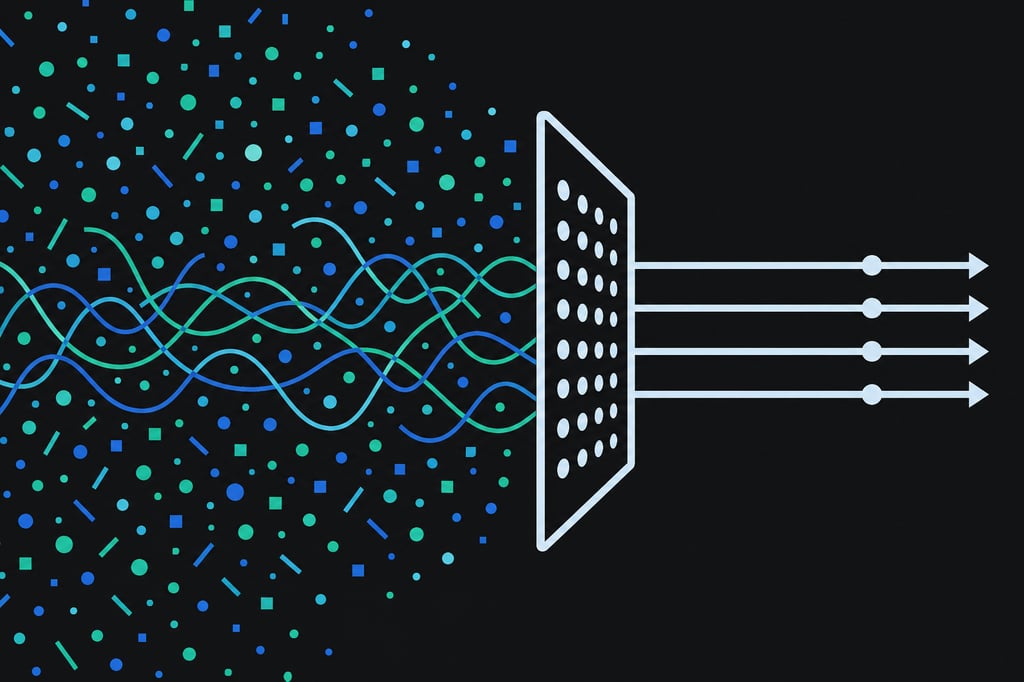
Synthesis takes the retrieved context and the investigated findings and produces a coherent clinical picture the physician can act on in the time available.
The patient’s record contains facts from multiple systems, entered by multiple clinicians, at different times, with different levels of completeness. Some conflict. A medication listed as active in the primary EHR was discontinued in a specialist system that never synced back. A diagnosis on the problem list hasn’t been addressed in three years. A lab value flagged as abnormal is abnormal for a 25-year-old — unremarkable for this 71-year-old.
Investigation surfaces these. Synthesis decides what they mean together and presents them in a form that supports a decision rather than multiplying the work.
The physician doesn’t need more information. They need the right information, weighted correctly, for the decision in front of them right now.
Three Problems Synthesis Must Solve
Conflicting signals
Patient records contradict themselves. Two providers document the same condition differently. A problem list was never reconciled after a hospitalization. The intake form disagrees with the chart.
Retrieval surfaces the conflicts faithfully. Investigation flags them. Synthesis must go further: reason about which signal is more likely accurate, in what context, and give the physician a coherent picture that acknowledges uncertainty without being paralyzed by it. That requires ontological grounding. RISA maps every clinical concept — diagnoses to SNOMED, labs to LOINC, medications to RxNorm — before synthesis begins. This is what lets the system recognize that “Metformin,” “metformin HCl,” and “Glucophage” are the same drug, that a creatinine of 1.3 means something different at 35 than at 74, and that two providers documenting the same condition under different codes are describing the same clinical reality. Without that semantic layer, synthesis resolves conflicts by guessing. With it, synthesis resolves conflicts by reasoning.
Incomplete records
No record is complete. Care delivered at a non-sharing facility, a prescription filled outside the network, a hospitalization that predates the current EHR — gaps are structural, not exceptional.
The dangerous failure mode is confidence without calibration: fluent, authoritative synthesis from partial data that feels complete but isn’t. A well-built synthesis layer names what it knows, what it doesn’t, and how much the gaps bear on the question being answered. A consumer chatbot that answers confidently from 70% of the relevant information is useful. A clinical AI that does the same thing is a liability.
Competing clinical priorities
Complex patients have several problems managed by several providers, often with tradeoffs between them. Tight kidney function management constrains diabetes options. Aggressive hypertension treatment interacts with a pain regimen. The right synthesis does not address each problem in isolation — it holds them together, makes the tradeoffs visible, and prepares the physician to exercise judgment with the full picture assembled.
What RISA’s Synthesis Layer Produces
Synthesis translates clinical complexity into something usable in twelve minutes. Across common encounter types, the difference is concrete:
|
Encounter |
What investigation surfaces |
What synthesis delivers |
|
Chronic disease follow-up |
Creatinine trend, medication gap, UACR overdue |
‘Renal trajectory warrants medication review before renewing metformin. Most recent nephrology input is 14 months old — consider outreach before next renewal.’ |
|
Post-hospitalization visit |
Three prior admissions, unaddressed social determinants note, discharge med list discrepancy |
Conflicting medication lists flagged with source and date. Prior admission pattern summarized. Care gap hypothesis surfaced for physician to evaluate — not assert. |
|
New patient intake |
Records from three health systems, two active specialists, fragmented problem list |
Unified longitudinal summary with confidence flags on unverified entries. Conditions ranked by recency and clinical relevance. Gaps in the record named explicitly. |
|
Acute urgent visit |
Active medications, allergy conflicts, prior workups for the same presentation |
Prior episodes with outcomes. Drug interactions ranked by severity. The physician’s current question answered in the context of this patient’s specific history — not population norms. |
Why Most AI Gets This Wrong
Products that stop at retrieval answer direct questions accurately. That’s useful. It does nothing for the physician before they ask.
Products that add investigation give proactive findings. Better. But findings without synthesis push the assembly work back onto the physician. They have the pieces. They still have to build the picture.
Synthesis is where clinical search becomes clinical intelligence. It is also where a weak data foundation is most exposed.
An AI synthesizing from one EHR produces coherent output. That coherence is the problem. The synthesis sounds complete. It isn’t. In clinical care, confident and incomplete is worse than explicit uncertainty — because the physician trusts it.
RISA normalizes the patient record across every system before synthesis begins. The gaps that remain are named. The conflicts are surfaced with attribution. The physician receives a picture that is honest about what it knows and what it doesn’t.
Confident and wrong is the most dangerous failure mode in clinical AI. It is also the one most likely to go undetected until the harm is done.
Normalization, Ontology, and the Synthesis Stack
Context, investigation, and synthesis each depend on the layer below them. Synthesis cannot be better than the investigation feeding it. Investigation cannot be better than the data it reasons over. The data cannot be complete if it comes from one system.
Between normalization and synthesis sits a layer that most vendors skip: ontology. Normalized data means the records are structured and consistent. Ontology means the concepts in those records carry clinical meaning. A FHIR-normalized record tells the system that a value exists and where it came from. An ontology-grounded record tells the system what that value means — how it relates to other values, what thresholds matter for this patient, and what clinical action it implies. RISA applies SNOMED, LOINC, and RxNorm mappings to every normalized record before synthesis begins. That is what allows the synthesis layer to reason about relationships, not just retrieve facts.
This is why RISA starts with cross-system normalization. Not as an infrastructure feature — as a clinical safety requirement. A synthesis layer running on single-EHR data will miss the specialist’s prescription, the external hospitalization, the lab from the other system. It will not tell the physician what it missed. It will produce output that looks authoritative and has invisible gaps.
Platform architecture is not a technical preference. It is what makes synthesis trustworthy at the point of care — for independent practices on athenahealth, not only for health systems with the budget to build bespoke integrations.
Synthesis built on a single EHR’s data does not produce partial synthesis. It produces complete-sounding synthesis with invisible gaps. That is a different problem — and a harder one.
Four Questions to Ask Any Vendor
Synthesis appears in almost every clinical AI pitch. Most of what it describes is not synthesis. Here is how to find out:
- Does the synthesis name what it doesn’t know? Ask to see the output when the record is incomplete. Confident summaries with no uncertainty flags are a warning sign.
- How does it handle conflicting data? Walk through a case where two sources disagree. Does the system pick one silently, surface both with attribution, or acknowledge the conflict explicitly? The answer tells you how much to trust the output.
- Is it reasoning from this patient’s record or from population patterns? Many ‘synthesis’ tools apply general guidelines to patient demographics. That is not synthesis from the longitudinal record. Ask for a specific example using actual patient data.
- What does it look like in month six of a live deployment? Demo data is curated. Real records are not. Ask for a live walkthrough on a production environment, not a prepared case.
What This Series Has Argued
Clinical AI without patient context is search. Clinical AI with context but without investigation answers the questions asked and misses the ones no one thought to ask. Clinical AI with investigation but without synthesis gives the physician more work, not less.
Synthesis completes the picture. It takes everything the platform retrieved and investigated and gives the physician something actionable in the time available — with the right information weighted correctly, the conflicts named, the gaps disclosed.
RISA delivers this for independent and specialty practices on athenahealth. Not as a pilot. Not at academic medical center scale only. Today, for the physicians who need the same clinical intelligence as the largest health systems — without the enterprise IT budget to build it from scratch. That is the platform argument, and it is also the clinical argument: the physicians who most need better synthesis are often the ones treating the most complex patients with the least institutional support.
This post is part of The Clarity Protocol, ThetaRho’s ongoing series on AI, clinical workflow, and healthcare data. The next piece closes the RISA framework with Act — what it means for clinical AI to move from reasoning to doing, the guardrails that make autonomous action safe in a clinical setting, and why Act is where the platform argument becomes most consequential.
ThetaRho (thetarho.ai) builds clinical AI infrastructure for healthcare organizations. RISA is our clinical intelligence platform — HIPAA-compliant, AICPA SOC certified, and live on the athenahealth Marketplace.
Leave a Reply